Sofia Lorenz · 3 October 2026
University Libraries Roll Out Silent Pods to Combat Exam Season Overcrowding
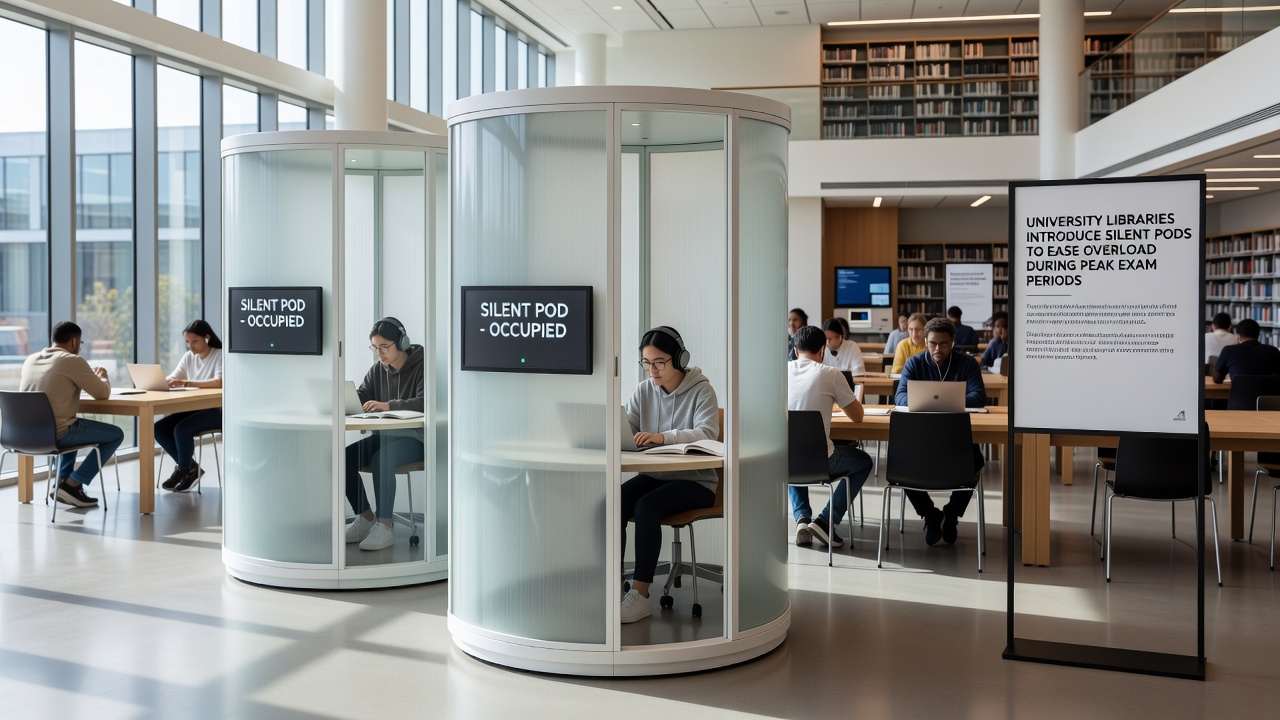
University libraries across multiple regions began rolling out silent pods in early October 2026 as exam periods approached and student numbers surged, creating new options for focused work amid crowded reading rooms and group study zones. These enclosed booths feature soundproof walls, adjustable lighting, ventilation systems, and power outlets designed for individual use during high-demand weeks when traditional seating fills quickly.
Administrators at several institutions reported that library visits spiked by 35 percent in the weeks before midterms and finals, according to internal usage logs compiled by facilities teams. The pods address noise complaints and seating shortages by offering compact spaces that block ambient sounds from conversations, phone calls, and footsteps while still allowing students to remain visible and accessible within the main library footprint.
Design Features and Installation Patterns
Each pod typically measures around two square meters and includes a desk surface, ergonomic chair, and USB ports along with Wi-Fi connectivity that remains stable even during peak hours. Some models incorporate tinted glass panels for privacy without complete isolation, while others use solid panels with small windows for monitoring. Installation crews at participating libraries completed retrofits in under three weeks by placing units along perimeter walls and in underused alcoves, leaving central areas open for collaborative work.
Data from pilot programs at European universities showed that pod usage reached 92 percent occupancy between 9 a.m. and 6 p.m. during the first exam cycle after launch. Researchers tracking foot traffic noted that students rotated through the booths in two- to four-hour blocks, freeing up tables for others and reducing overall congestion in main halls. Similar patterns appeared in North American campuses where comparable units were added the previous academic year.
Reported Effects on Student Concentration
Library staff collected feedback through short digital surveys distributed at pod exits, and preliminary tallies indicated that users completed study sessions with fewer interruptions compared to open seating areas. One analysis conducted by a Canadian research team and published in an academic journal found measurable drops in self-reported distraction levels when participants worked inside enclosed units versus standard carrels. The study examined 180 students across two institutions and recorded average session lengths extending by 45 minutes inside the pods.
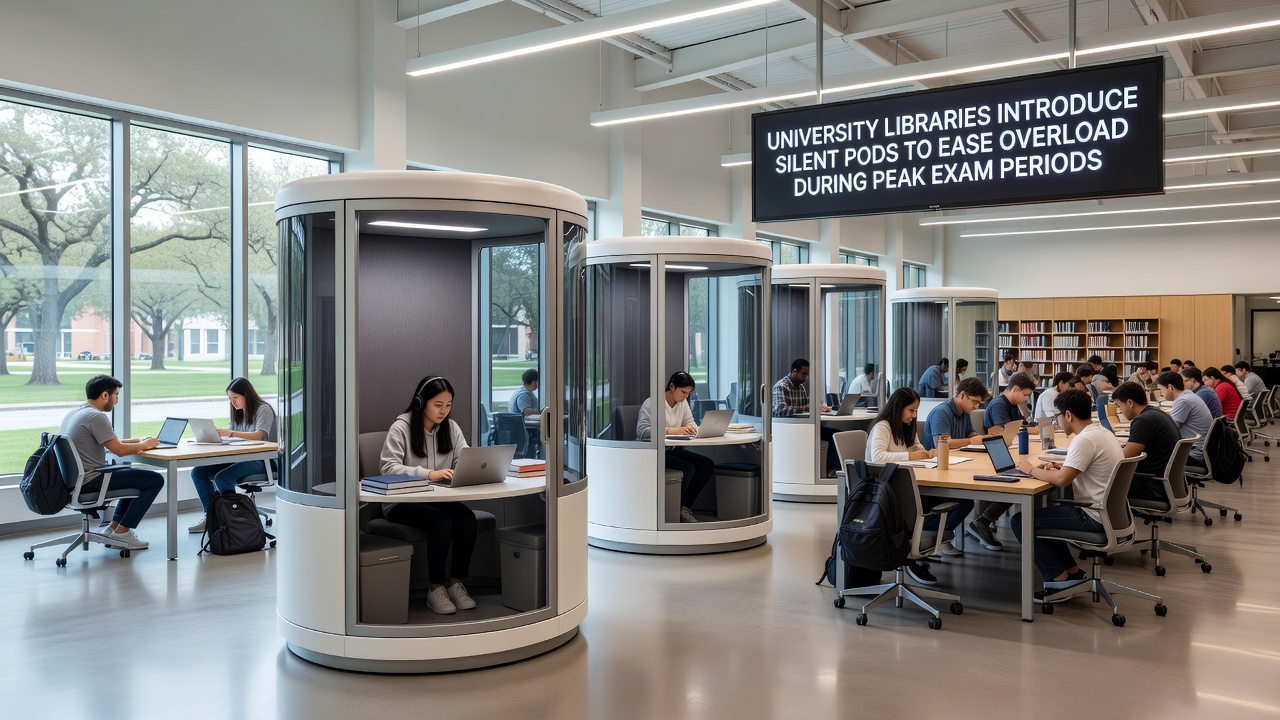
Equipment suppliers delivered modular units that libraries could expand or relocate as needed, and maintenance logs showed low repair rates during the initial rollout. Ventilation fans operate at low decibel levels, and booking systems integrated with existing library apps allow advance reservations up to 48 hours in advance. Observers tracking October 2026 activity at multiple sites noted that reservation lists filled within minutes of opening each morning, prompting some libraries to add evening slots and weekend availability.
Broader Context From Library Space Studies
Academic library organizations have documented rising demand for varied study environments over the past decade, with reports from the Association of College and Research Libraries highlighting shifts toward hybrid quiet and collaborative zones. A 2025 survey by that group revealed that 68 percent of responding institutions planned infrastructure upgrades to accommodate both individual focus and group projects. The silent pods fit into this trend by providing dedicated quiet options without requiring new building construction.
Institutions in Australia and the United Kingdom introduced comparable enclosures earlier, and their usage statistics influenced planning at later adopters. A report from the Australian Department of Education, Skills and Employment outlined how enclosed study units reduced wait times for seating in high-traffic libraries by distributing users more evenly throughout the day. European networks shared similar findings through inter-university working groups, leading to coordinated procurement of standardized pod models.
Operational Considerations and Future Adjustments
Facilities teams monitor pod cleanliness and air quality through scheduled checks, while IT departments handle any connectivity issues via remote diagnostics. Early data indicate that power consumption stays within expected ranges because the units use LED lighting and efficient fans rather than full climate control systems. Some libraries adjusted cleaning protocols to occur between reservation blocks, minimizing downtime and keeping availability high during peak weeks.
Additional sensors track occupancy in real time and feed information to public dashboards so students can see which pods remain free before walking across campus. This system builds on existing seat-counting technology already used in many large libraries. As October 2026 progressed, several sites reported plans to expand their pod counts for the spring semester based on reservation waitlist lengths and repeat usage patterns.
Conclusion
University libraries continue to adapt physical spaces in response to documented increases in exam-period attendance, and silent pods represent one targeted solution that multiple institutions adopted during the 2026 cycle. Usage records, survey responses, and comparative studies from earlier implementations provide the basis for ongoing refinements at each site. The approach integrates with broader efforts to balance quiet study needs against collaborative demands while maintaining accessibility across diverse student populations.