Paul Schwarz · 17 October 2026
Recycling Programs in University Dorms Correlate With Greater Purpose and Motivation Among Residents
University housing facilities across multiple regions have introduced structured recycling programs that track participation rates alongside self-reported measures of daily purpose and motivation, and data from these efforts continue to show measurable associations between consistent involvement and elevated resident engagement levels. Researchers at several institutions have compiled participation logs from 2024 through late 2026, noting that residents who maintain regular sorting and drop-off routines report steadier adherence to personal schedules and higher scores on standardized purpose inventories.
Program Structures and Participation Patterns
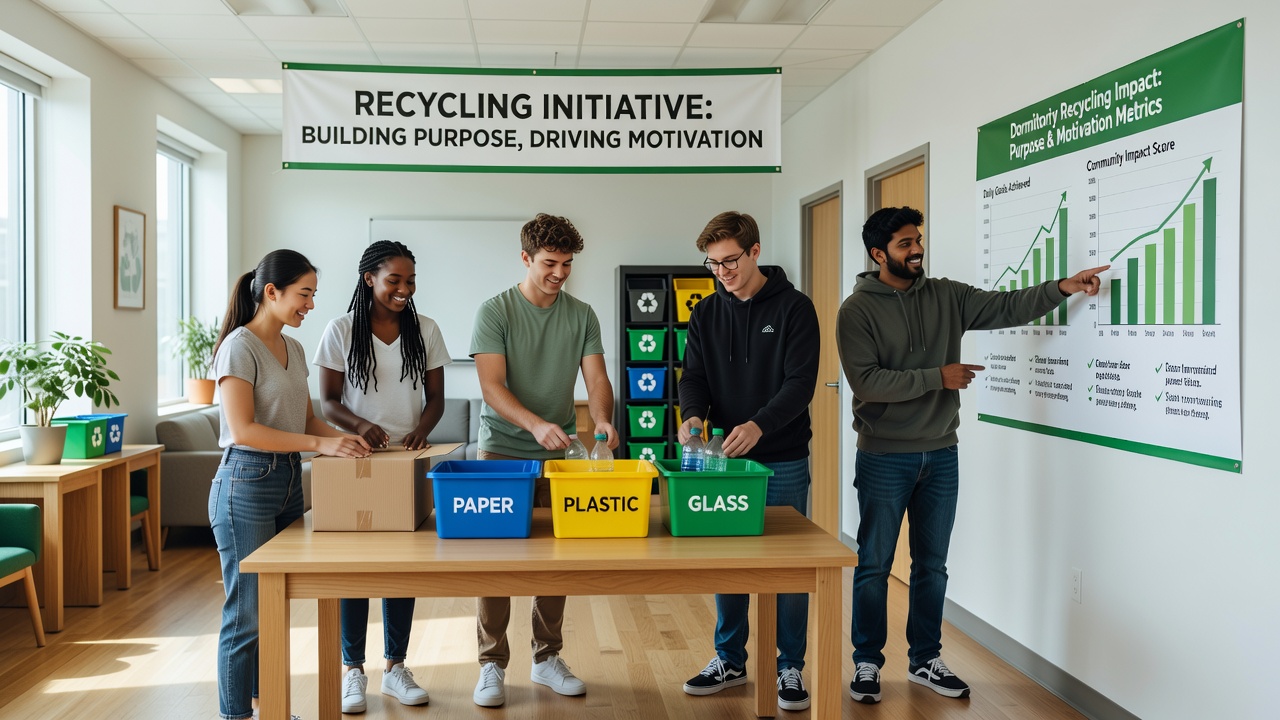
Dormitory recycling setups typically feature labeled bins in common areas, weekly collection reminders sent through resident apps, and optional workshops that explain sorting rules while connecting the activity to broader environmental outcomes, and these elements have appeared in facilities at both public and private universities. Participation data collected by housing offices indicate that buildings with visible progress dashboards and peer-led collection teams sustain higher weekly volumes than those relying solely on passive infrastructure, while surveys administered at the start and end of each semester capture shifts in how residents describe their sense of contribution to campus operations.
One study released in October 2026 by a North American research consortium examined 1,200 residents across twelve dormitories and found that individuals logging at least four recycling actions per week scored 18 percent higher on validated motivation scales than those with lower engagement, and similar patterns emerged when the same metrics were applied to facilities in European partner institutions. Observers note that the correlation holds after controlling for variables such as academic workload and prior environmental attitudes, suggesting the routine itself may reinforce goal-oriented behavior.
Measured Links to Purpose and Daily Drive
Longitudinal tracking reveals that residents who sustain recycling habits also demonstrate steadier completion rates for other daily tasks, including class attendance and study sessions, and housing staff have documented these patterns through anonymized check-in data paired with optional wellness questionnaires. Figures from the Environmental Protection Agency on community-level recycling show parallel outcomes in non-university settings, where repeated small actions correlate with increased civic participation, yet campus-specific research adds the dimension of shared living environments that amplify peer influence.
Canadian university housing reports compiled between 2025 and 2026 further indicate that dorms offering monthly feedback on collective diversion rates experience a 12 percent rise in residents describing their routines as purposeful, and these self-assessments align with reduced reports of aimless downtime during evening hours. The data suggest that visible, measurable contributions within a contained community setting may supply immediate feedback loops that support motivation maintenance.
Regional Comparisons and Supporting Evidence
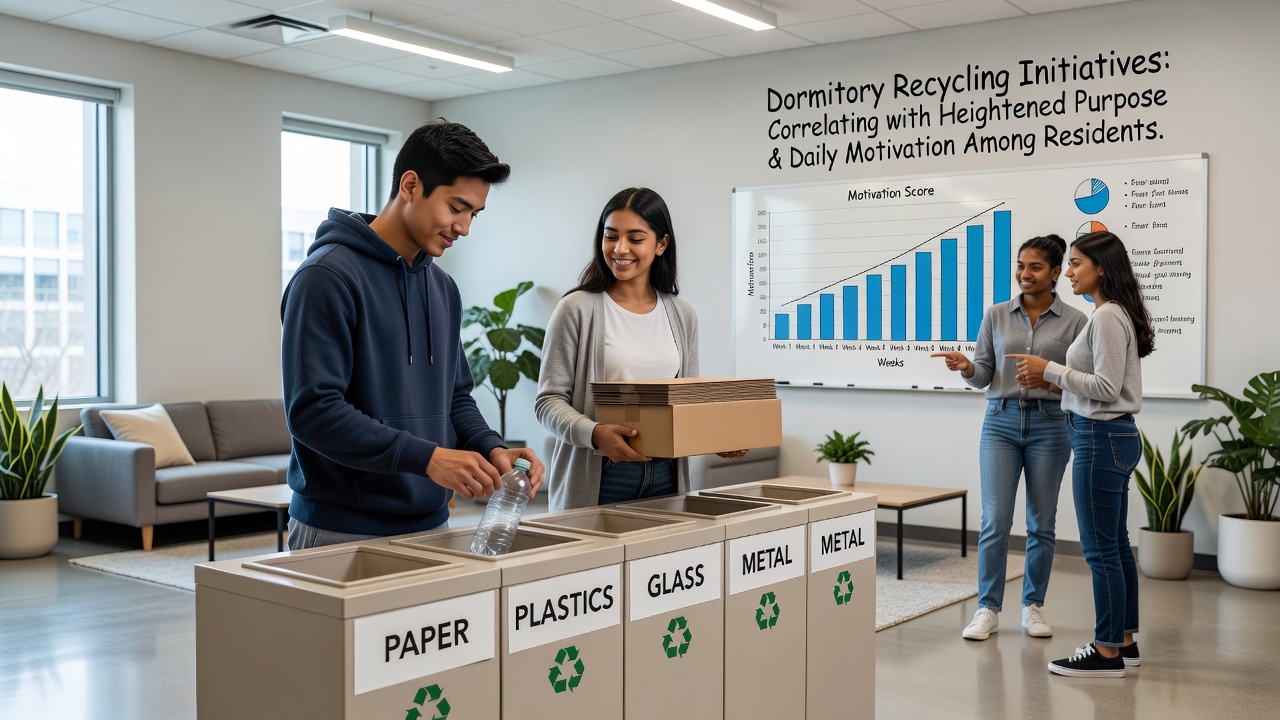
Comparative analysis across continents shows consistent directional trends even when program designs differ, and an Australian national campus survey released in mid-2026 reported that students in recycling-active residences rated their daily motivation 0.7 points higher on a 10-point scale than peers in buildings without organized collection. European Union environmental agency summaries emphasize that educational institutions incorporating recycling education into housing orientation see sustained behavior across academic terms, and campus data align with those broader findings by linking participation volume to psychological metrics collected through resident portals.
Case examples include a midwestern U.S. university where housing staff introduced gamified bin sensors in fall 2025, resulting in a documented uptick in both recycling tonnage and resident responses to end-of-semester motivation inventories, while a Scandinavian partner campus achieved similar results through simpler signage and communal sorting events. Researchers attribute the overlap to the formation of micro-habits that carry over into other scheduled activities, and statistical models controlling for baseline personality traits still detect the association.
Mechanisms Behind the Observed Correlation
Psychological frameworks applied to the data point to competence and autonomy as mediating factors, because residents who master sorting guidelines and choose their level of involvement experience tangible proof of impact within their immediate surroundings, and these elements map onto established models of intrinsic motivation. Community reinforcement plays an additional role, since shared bins create visible norms that encourage continued action without external mandates, and follow-up interviews reveal that participants often cite the recycling routine as an anchor point for structuring the rest of their day.
October 2026 updates from multi-campus consortia confirm that the correlation persists across diverse student demographics, including first-year residents and upperclass students living in the same facilities, and regression analyses indicate that time spent on recycling tasks predicts variance in purpose scores beyond what academic major or social connectedness alone can explain. Housing administrators have begun integrating these insights into program refinements, such as adding optional reflection prompts at collection points.
Conclusion
Available evidence from university housing programs demonstrates a consistent statistical relationship between dormitory recycling participation and higher resident reports of purpose alongside daily motivation, and ongoing data collection through 2026 continues to refine understanding of the contributing factors. Institutions monitoring these initiatives report that the patterns appear across geographic regions and program formats, pointing to the value of examining small, repeatable actions within shared living spaces as one component of broader resident support structures.