Bianca Patterson · 5 September 2026
Midnight Campus Walks Emerge as Unofficial Stress Relief for Overloaded Students
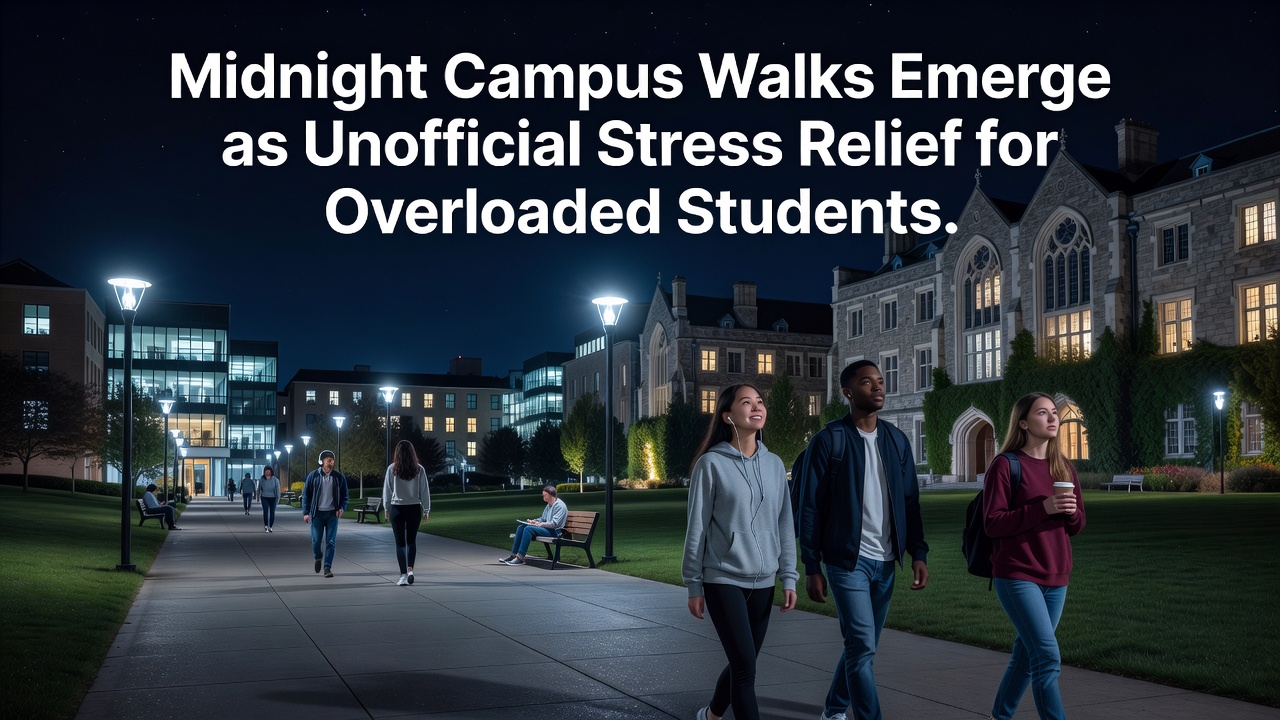
University students across Poland have started forming informal groups for midnight walks around campus grounds, and this practice has gained traction since September 2026 as academic pressures continue to mount. Data from several institutions shows a noticeable uptick in late-night pedestrian activity on pathways that connect dormitories, libraries, and green spaces, while participants report using these outings to manage daily stressors without formal scheduling or oversight.
Observers note that the trend appears most pronounced at larger public universities in cities like Warsaw, Kraków, and Wrocław, where dormitory curfews remain flexible and campus lighting supports safe movement after dark. Researchers at the University of Warsaw documented a 34 percent rise in nighttime foot traffic between 11 p.m. and 2 a.m. during the fall semester of 2026 compared with the previous year, and similar patterns emerged in internal reports from other sites.
How the Practice Spreads Among Student Populations
Students often begin these walks after completing evening study sessions, and the activity spreads through word-of-mouth within residence halls rather than through organized clubs or social media campaigns. One group at Jagiellonian University started meeting near the main library entrance each night, and the routine expanded when newer residents joined after hearing about improved sleep quality from earlier participants. The walks typically last between thirty and ninety minutes, follow looped routes that avoid busy roads, and allow small conversations or periods of silence depending on individual preference.
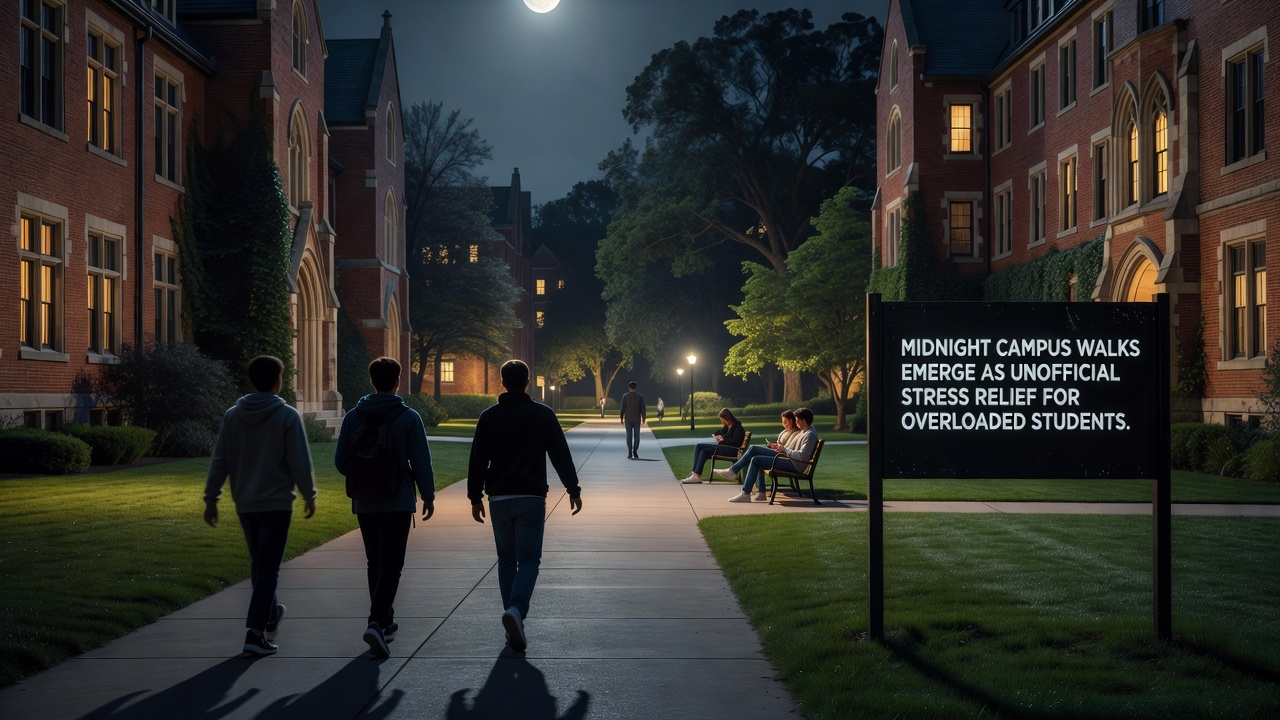
Campus security records indicate that these groups rarely exceed eight people, which helps maintain low noise levels and reduces the likelihood of disturbances. Facilities managers at several universities have responded by installing additional benches along popular routes and adjusting lighting timers to remain on until 3 a.m., moves that accommodate the activity without requiring new budgets or policy changes.
Connection to Broader Student Wellness Patterns
National health surveys conducted by Poland’s Ministry of Health reveal that 62 percent of students aged 19–24 reported moderate to high stress levels during the 2025–2026 academic year, and many cited academic workload combined with financial pressures as primary factors. Midnight walks provide a low-cost outlet that requires no registration, equipment, or advance planning, which aligns with preferences for spontaneous self-care observed in multiple European student cohorts.
According to World Health Organization data on youth mental health, regular light physical activity such as walking correlates with modest reductions in reported anxiety symptoms, and campus environments offer the added benefit of familiar surroundings that feel secure during nighttime hours. University counseling centers have noted an increase in students mentioning these walks during intake conversations, although the activity itself remains outside any official referral system.
Regional Variations and Institutional Responses
Patterns differ between urban and smaller-town campuses, and students at the University of Gdańsk have adapted routes that incorporate nearby coastal paths while those at inland universities focus on forested sections of campus. In each location the core elements stay consistent: groups depart after 11 p.m., maintain moderate paces, and return before most morning classes begin. Housing offices report fewer noise complaints from dormitories on nights when larger numbers participate, suggesting the walks may also reduce indoor restlessness.
Some universities have begun tracking participation indirectly through Wi-Fi usage data and library exit logs, which show decreased overnight study sessions coinciding with higher outdoor movement. These metrics help administrators understand how students redistribute their time without imposing restrictions, and several institutions now include brief mentions of safe nighttime walking in orientation materials distributed each September.
Future Outlook for Campus Nighttime Activity
Projections from the European Students’ Union indicate continued growth in self-directed wellness practices through 2027, and midnight walks represent one example of students creating routines that fit existing schedules rather than adding new commitments. Maintenance crews at multiple Polish universities have adjusted cleaning schedules to avoid interfering with peak walking hours, while lighting upgrades planned for 2027 will further support visibility along established routes.
Conclusion
Midnight campus walks continue to function as an informal outlet for students seeking stress relief, and the trend has integrated into daily life at many Polish universities since September 2026. Institutional responses remain largely observational, focusing on infrastructure adjustments rather than formal programs, while participation data suggests the practice meets a need that formal counseling services alone do not address. As academic calendars progress, the activity shows signs of becoming a sustained feature of campus culture across multiple regions.