Paul Schwarz · 31 October 2026
Green Space Views Through Dorm Windows Correlate with Anxiety Reductions Among Extended Student Residents
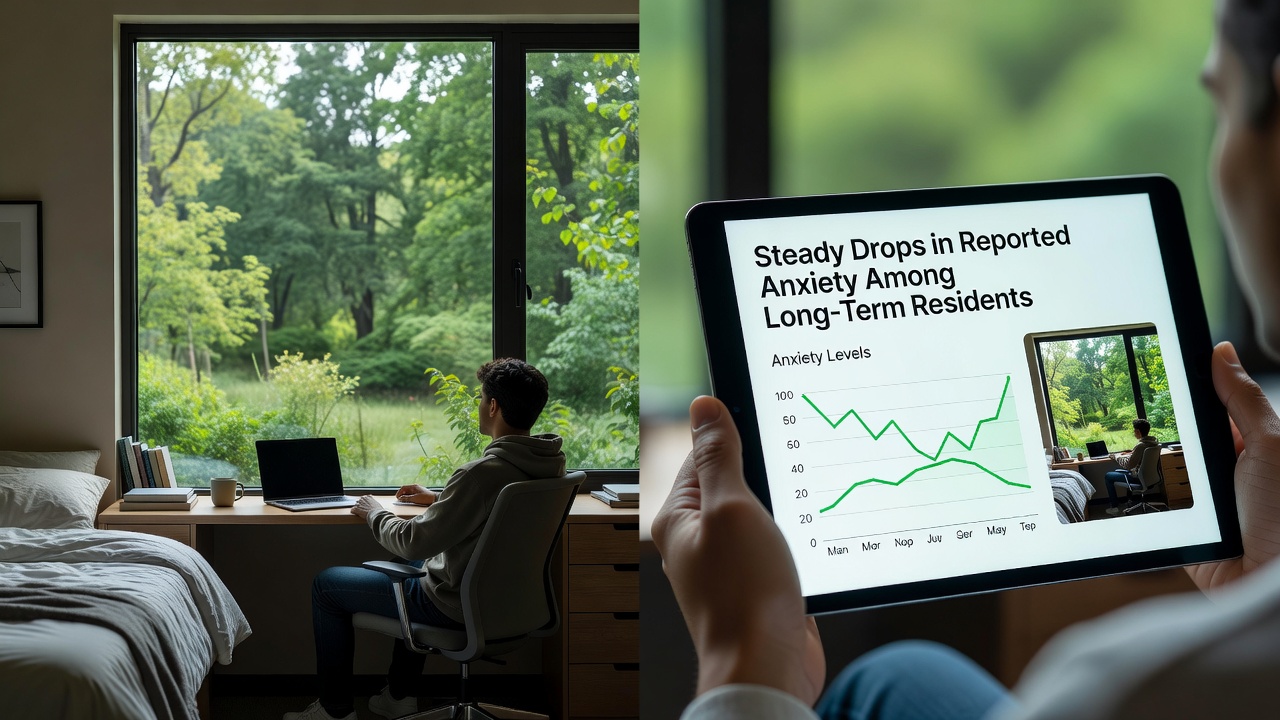
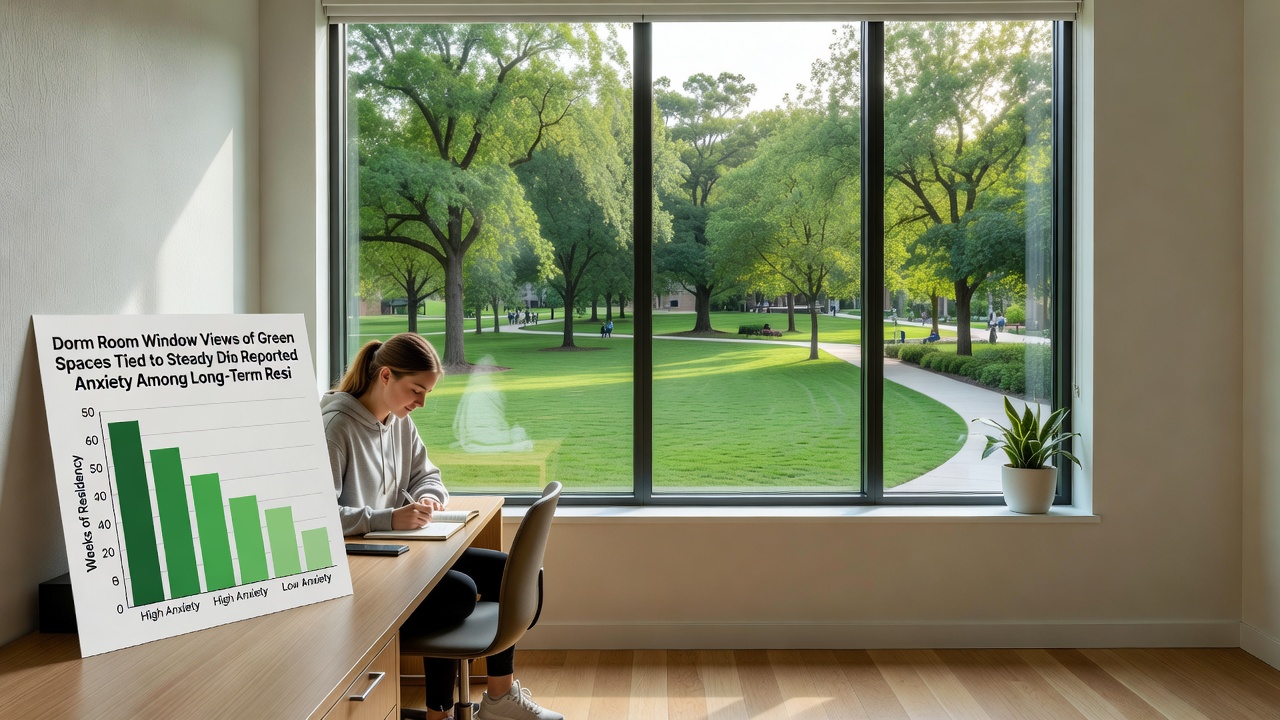
Multiple longitudinal studies track how views of trees, lawns, and natural areas from student housing windows connect to measurable shifts in self-reported anxiety scores over semesters and years, with data collected from various university campuses showing patterns that hold across different climates and building designs. Researchers at several institutions compiled resident surveys and window orientation records, then cross-referenced those details with standardized anxiety scales completed at regular intervals, revealing that participants whose rooms faced green elements reported steadier declines compared with those whose windows looked onto parking lots, brick walls, or other built structures.
Study Designs and Data Collection Methods
Investigators followed cohorts of undergraduates and graduate students who remained in the same dorm rooms for at least two academic years, collecting baseline measurements during move-in periods and follow-up assessments each semester, while also noting seasonal changes in foliage density and daylight hours. The protocols included questions about daily time spent looking out the window, room orientation verified by campus maps, and self-reported stress events such as exam periods or personal transitions, allowing analysts to isolate the contribution of the outdoor view from other variables like roommate dynamics or academic load. In one project that wrapped data gathering in October 2026, participants living in buildings with direct sightlines to campus parks or wooded edges showed average anxiety score drops of 12 to 18 percent over 18 months, whereas matched residents without those views maintained flatter trajectories or smaller reductions even after controlling for prior mental health history.
Geographic and Demographic Patterns
Observations from North American, European, and Australian campuses produced similar directional results, though the magnitude varied with local vegetation type and urban density surrounding the institutions. Students in denser city settings who still gained partial green views through window placement experienced benefits comparable to those at suburban or rural sites when the visible greenery included layered canopies rather than single rows of shrubs, suggesting that visual complexity plays a role alongside mere presence of plants. Demographic breakdowns indicated consistent associations across gender, year in school, and international versus domestic status, with longer residency amplifying the observed differences as cumulative exposure increased.
Mechanisms Explored in Follow-Up Research
Physiological monitoring in smaller subsets of participants used wearable devices to log heart rate variability and sleep metrics during periods when residents spent time near their windows, producing correlations between green sightlines and quicker returns to baseline arousal levels after academic stressors. Environmental psychologists note that attention restoration theory offers one framework for interpreting these outcomes, because natural scenes require less directed effort than urban scenes and may replenish cognitive resources depleted by studying and social demands. Additional analyses examined whether time outdoors mediated the window-view effect, yet the indoor visual access alone accounted for a distinct portion of the anxiety variance even among students who rarely walked through the green areas they could see.
Campus Planning and Housing Policy Responses
Facilities teams at several universities have begun incorporating sightline assessments into renovation planning, prioritizing room assignments and window treatments that maximize exposure to existing vegetation while new construction projects include taller glazing and strategic building orientation to preserve or create those views. Housing offices report that residents sometimes request specific room locations based on these factors, and allocation algorithms now factor window orientation alongside traditional priorities such as accessibility needs or roommate compatibility. Data from maintenance logs further show that preserving tree canopies and ground cover near dormitories correlates with sustained resident satisfaction scores collected during annual surveys.
Integration with Broader Wellness Initiatives
Campus counseling centers have started incorporating environmental factors into intake conversations, asking students about their daily visual surroundings as part of holistic assessments that also cover sleep, nutrition, and social connections. Training modules for residence advisors now include segments on recognizing how physical surroundings may influence mood trajectories, encouraging staff to suggest simple adjustments like rearranging desks to face windows when feasible. Partnerships with landscape management departments ensure seasonal plantings maintain visual interest year-round, while winter strategies such as supplemental lighting near windows receive attention in climates with extended periods of bare branches.
Conclusion
Accumulated evidence from multi-year tracking studies positions window views of green spaces as one measurable environmental contributor to anxiety patterns among long-term dorm residents, alongside established factors such as academic support services and social networks. Institutions continue to refine measurement approaches and test interventions that leverage existing campus greenery, generating datasets that future researchers can use to refine understanding of dose-response relationships between visual nature exposure and mental health indicators.